


Prof. Neil Selwyn Professor in the Faculty of Education at Monash University
Biography:
Prof. Neil Selwyn is a Professor in the Faculty of Education at Monash University, Melbourne, having previously worked in the Institute of Education, London, and the Cardiff School of Social Sciences. He has spent the past 30 years researching the integration of digital technology into schools, universities, and adult learning.
Prof. Selwyn is recognised as a leading international researcher in the area of digital education, with particular expertise in the ‘real-life’ constraints and problems faced when technology-based education is implemented. He is currently working on nationally funded projects examining the roll-out of educational data and learning analytics, AI technologies, and the changing nature of teachers’ digital work.
He has conducted funded research on digital technology, society, and education for national research agencies and funders in the UK, Australia, the US, Sweden, and Uruguay, alongside projects for the BBC, the Gates Foundation, Microsoft Partners in Learning, Save The Children, the National Assembly of Wales, and UNESCO.
Prof. Selwyn is a regular keynote speaker at international conferences, a Fellow of the Academy of Social Sciences in Australia, and also produces the ‘Education Technology Society’ podcast. He is writing this in the third person.

Prof. Cecily Raynor Associate Professor and Chair of the Department of Languages, Literatures and Cultures at McGill University
Biography:
Prof. Cecily Raynor is an Associate Professor and Chair of the Department of Languages, Literatures and Cultures at McGill University. She works at the intersection of digital humanities, Latin American cultural studies, and environmental humanities. Her research focuses on how computational tools, digital infrastructures, and data practices shape contemporary cultural production, particularly in multilingual and Global South contexts.
Her work brings together close reading, cultural theory, and computational methods—including text analysis, digital archives, and transmedia storytelling—to examine how literature, film, and digital media respond to crises such as pandemics, environmental degradation, and technological extractivism. She is especially interested in questions of linguistic diversity, technological sovereignty, minimal and critical computing, and the ethics of data production and preservation.
Prof. Raynor has led and co-developed several digital humanities initiatives, including interdisciplinary research programs, lecture series, and curriculum development that foreground ethical, multilingual, and environmentally attentive approaches to computation. She is co-editor of Digital Encounters in Contemporary Latin America and is currently working on projects that examine regionally grounded digital models, alternative computational infrastructures, and cultural responses to AI and platform capitalism across Latin America and beyond.

Prof. Meredith Martin Founding Director of the Center for Digital Humanities at Princeton University
Biography:
Prof. Meredith Martin is the founding director of the Center for Digital Humanities at Princeton University, where she curates opportunities for collaboration across the humanities, social sciences, data science, and computer science. Her books include Poetry’s Data (2025) and The Rise and Fall of Meter (2012). An expert in the history of poetry and poetic forms in English, Prof. Martin researches poetry in the age of AI, how machine learning systems characterize literary style, and how humanities research relates to data work.
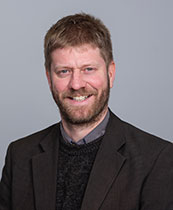
Prof. Pieter Francois Professor of Cultural Evolution and Director of the Computational Humanities Lab at the University of Oxford
Biography:
Prof. Pieter Francois is Professor of Cultural Evolution and Director of the Computational Humanities Lab at The University of Oxford. He is the founder of the Seshat Global History Databank project, a leading digital humanities project aimed at writing world history in a quantitative way. At the Alan Turing Institute, he is the Research Lead of the Resilient Societies Research Group. His work focuses on studying long-term trends in world history, especially the evolution of social complexity and the role religion plays in it.
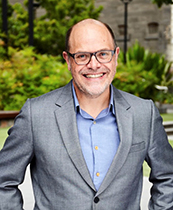
Prof. Julian Thomas Director of the ARC Centre of Excellence for Automated Decision-Making and Society (ADM+S), RMIT University
Biography:
Distinguished Professor Julian Thomas is the Director of the ARC Centre of Excellence for Automated Decision-Making and Society (ADM+S), based at RMIT University, Melbourne. His research focuses on communications and information policy, digital inclusion and inequality, and the history of communications technologies. He has had a longstanding engagement with consumer interests and is a former Chairperson of the ACCAN, the Australian Communications Consumers Action Network. His recent books include Wi-Fi and the Sage Handbook of the Digital Media Economy.